Building a Hollow-Built Bamboo Switch Rod – Chapter 3

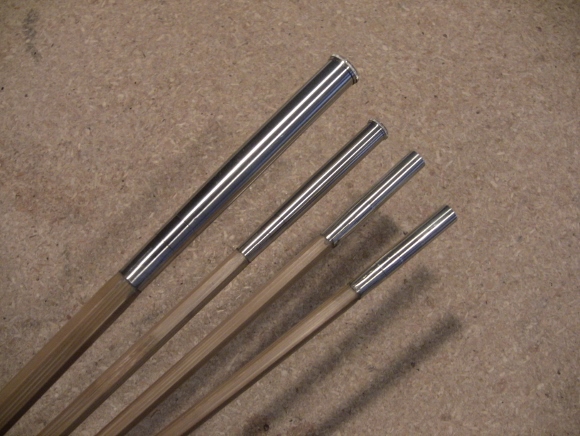
I’ve been making good progress on my hollow-built bamboo switch rod.  The next step was making a custom winding check.  Bill Bennett at Bellingers made a few of these for me last year and has inspired me to build my own.  I machine small pieces of nickel/silver for the winding check, and then machine and polish black acrylic as the trim piece.  They look pretty nice on my switch rods.
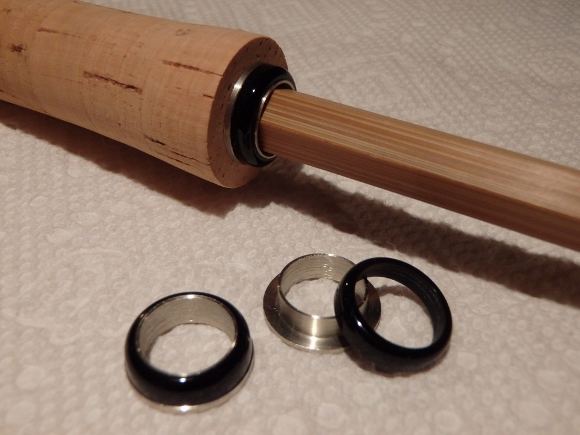
Custom Machined Winding Checks

Custom Machined Winding Checks

Then it was time to blue the ferrules.  I use Brownells Oxpho-Blue liquid gun bluing solution on my nickel/silver ferrules.  First, the areas I don’t want blued get masked off with tape.  I then wipe a cotton swab drenched in the bluing solution over the ferrule, always making sure I move over the entire surface that I want blued.  It takes about 30 to 45 seconds at room temperature to get the desired effect.  Here is what it looks like:
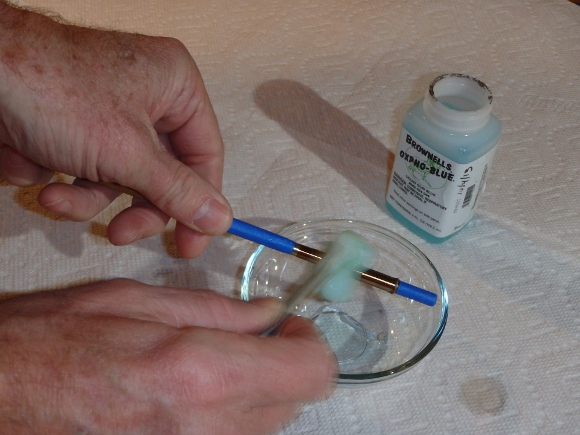
Bluing a Nickel/Silver Ferrule.

Bluing a Nickel/Silver Ferrule.

It’s important to rinse the ferrule very well in running water to remove all the residual bluing solution.  Let it dry, and then spray the blued surface of the ferrule with a clear lacquer to protect it.  I use Rust-Oleum Painter’s Touch Crystal Clear Gloss in a spray can, but any good clear lacquer should work fine.  Then it was on to wrapping the guides.  As with all my switch rods, I use black thread with straw and claret tipping on my wraps.  I use Pearsall’s Naples thread on the ferrules, and Pearsall’s Gossamer thread on the snake guides.  The Stripping Guide is a 16 mm Black Banded Agate guilde.
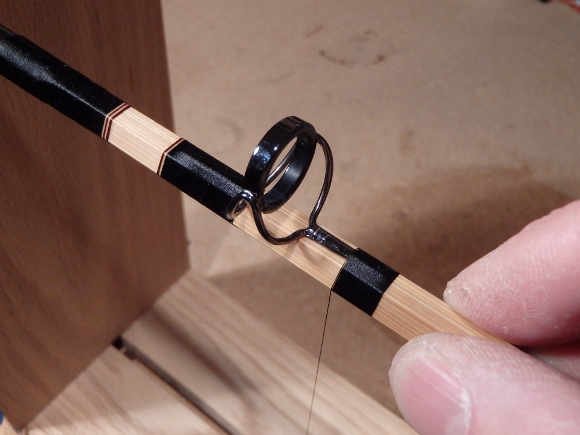
Wrapping a Black Banded Agate Stripping Guide
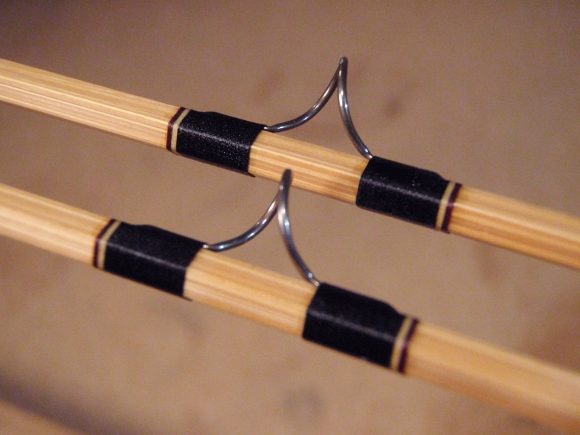
Wrapping a Black Banded Agate Stripping Guide

Snake Guides on my Switch Rod.

Snake Guides on my Switch Rod.

Finally, after coating all the guide wraps with 8 coats of Varathane 900 Gloss, the rod was ready for finishing in my dipping tube process.  I put on 6 coats of polyurethane on my rods, using a dip tube filled with finish.  Each rod section is dipped into the finish and slowly pulled out.  The finish just runs off all the guides.   It takes about 2 hours to dip an entire rod.
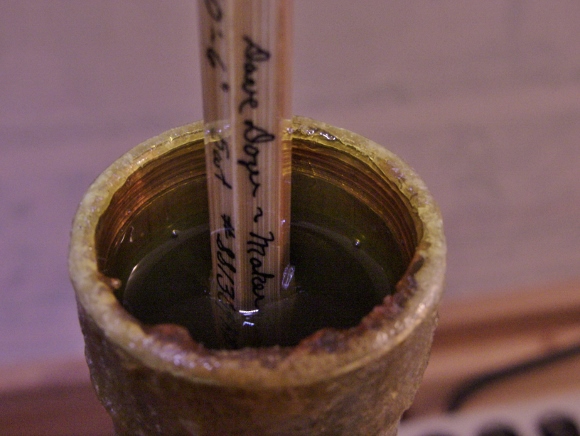
The Butt Section coming out of the dip tube of finish.

The Butt Section coming out of the dip tube of finish.

It’s a slow process…kinda like watching paint dry!  After a day of drying time, each section gets a thorough sanding with 1500 grit sand paper, first the flats on the thread wraps, and then the flats on the bamboo.
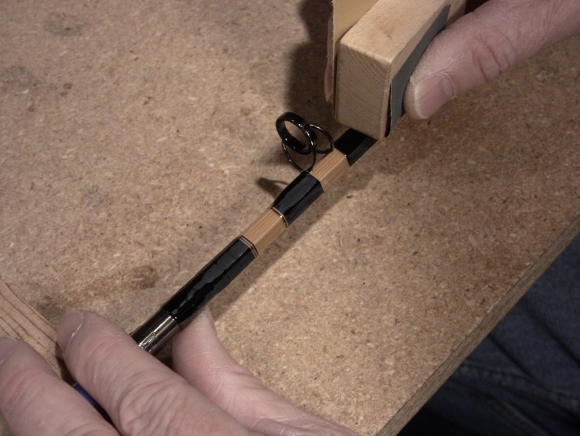
Sanding the thread wraps after the fifth coat of finish.

Sanding the thread wraps after the fifth coat of finish.

Finally, after six dips and a final 48 hours of drying time, the finish gets rubbed out with a polishing compound.  I use Meguiars Mirror Glaze 83 as a polishing compound and a small felt pad.  This process helps take out any dust particles that have made their way onto the finish coat.
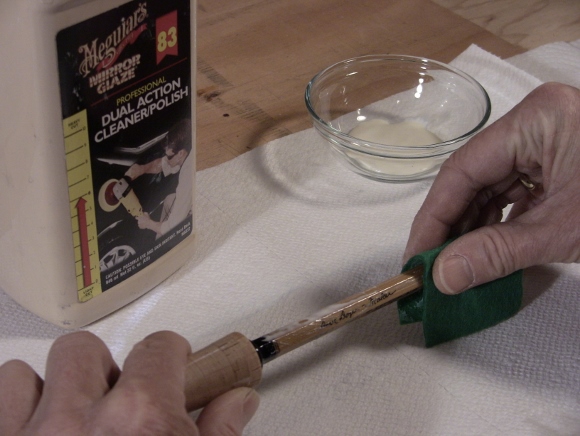
Polishing after the final finish dip.

Polishing after the final finish dip.

And that’s it.  After doing  a final fitting of the ferrules, the Hollow-Built Switch Rod is finished.
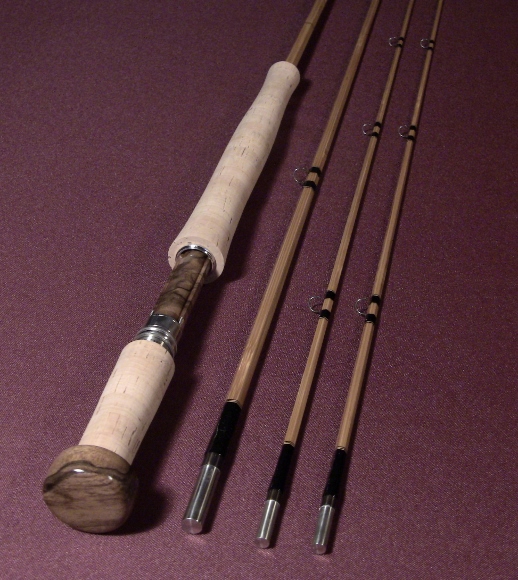
The finished Hollow-Built Switch Rod.

The finished Hollow-Built Switch Rod.


And of course, I had to do a little casting down on the river this afternoon….
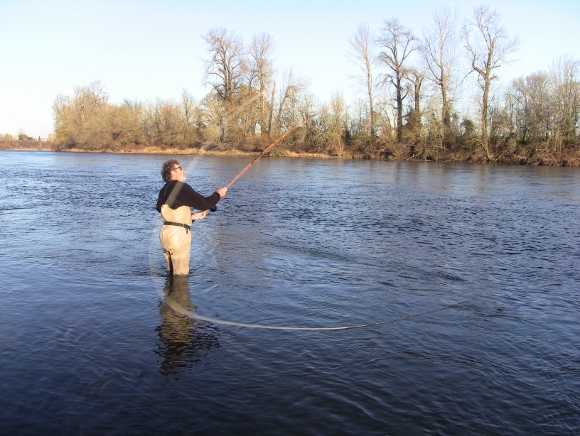
Casting a Hollow-Built Switch Rod.
Casting a Hollow-Built Switch Rod.


My Workshop Lathes

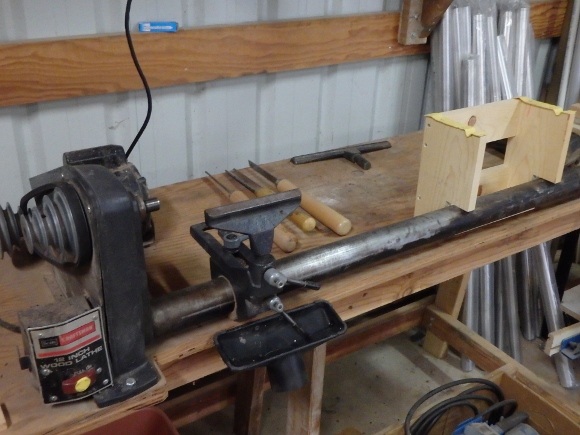
Larry asked a great question…what kind of lathe (s) do I use in my rod building?  I use two older lathes, neither of which is/was very expensive.  First, I have an older Craftsman wood lathe that I use for making reel seats, sanding cork grips, and sanding down rod tubes.

My Wood Lathe

My Wood Lathe

The wood fixture on the right side of the picture supports the end of butt sections when I sand down cork grips.  Two notches with strips of leather chamois applied work pretty well to support the ferrule end of the butt section while the grip end is secured in a 3-jawed chuck in the lathe head.

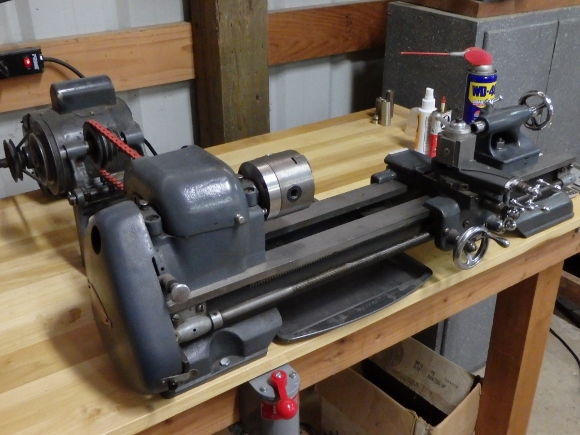
I also have a small Atlas/Craftsman Mk 1 metal lathe that I use to machine small metal parts (winding checks, trim pieces, etc.) as well as turning down bamboo for ferrules and grip sections.

My Small Metal Lathe

My Small Metal Lathe

While it would be fun to have newer and larger lathes in my shop, I find that these two do just about everything I need.  By the way…things don’t normally look this clean and organized in my shop…I cleaned up for the photos.

Building a Hollow-Built Bamboo Switch Rod – Chapter 2

Work is continuing on the hollow-built switch rod.  The next step was to glue on and fit the ferrules.  There is a #20 ferrule on the Butt/Mid Sections and a #14 ferrule on the Mid/Tip sections.

Fitted Ferrules

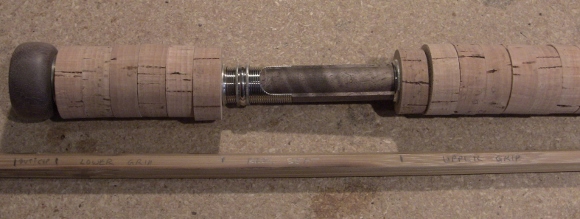
Then it was time to layout the grip and reel seat on the butt section.

Grip Section Layout

Grip Section Layout

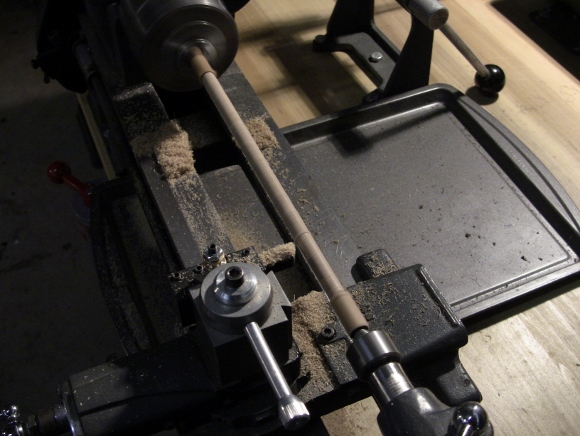
The butt section needed to be turned down on the lathe to accommodate the reel seat and lower grip.

Turning down the Butt Section for the reel seat and lower grip.

Turning down the Butt Section for the reel seat and lower grip.

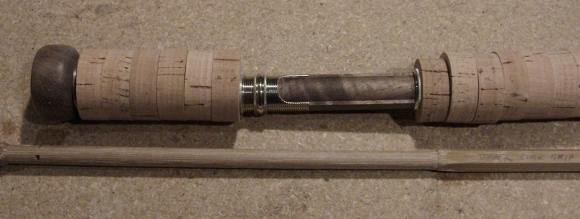
The Butt Section was now ready for the upper cork to get glued on.

Turned down Butt Section

Turned down Butt Section

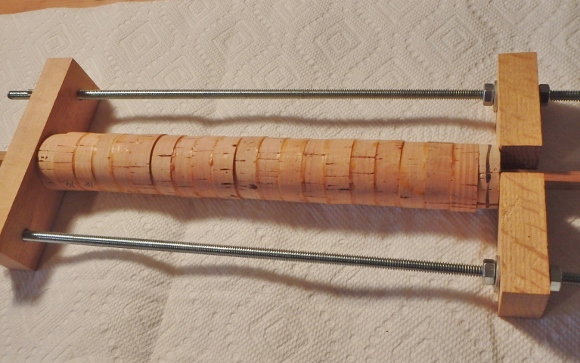
Cork for upper grip.

Cork for upper grip.

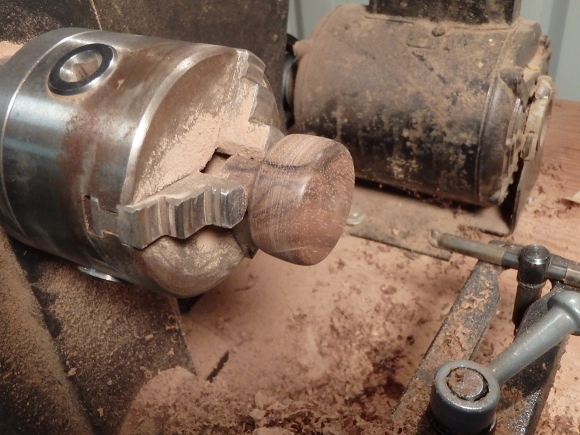
A little sidetrack…I needed to turn a reel seat and butt cap on my wood lathe.  I chose a new piece of highly figured English Walnut.

Turning the Butt Cap on the lathe.

Turning the Butt Cap on the lathe.

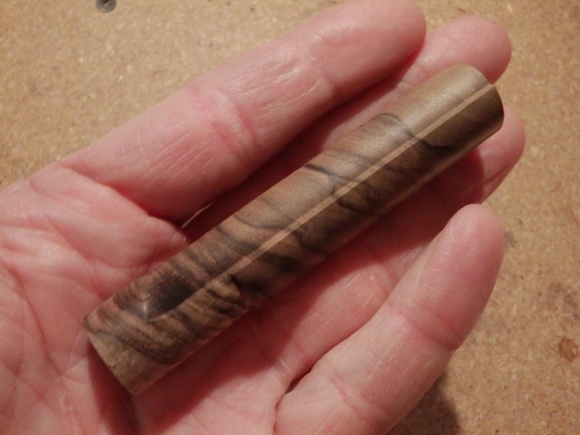
Turned Reel Seat.

Turned Reel Seat.

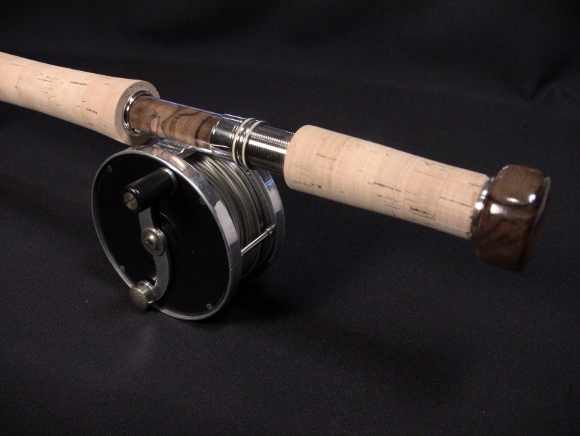
Now it was time to sand down the upper cork grip, glue on the reel seat and hardware, glue on the lower cork grip and sand it, and finally glue on the butt cap.  This resulting finished grip section of the rod came out looking great.

Finished grip section on my switch rod.

Finished grip section on my switch rod.

The next Chapter of my build process is making a custom winding check, wrapping the guides, varnishing, and final finish work.  I’ll share that in Chapter 3.


Fly Lines and Bamboo Rods

I’m not really a “fly line geek” like this article talks about, but I’m a firm believer that matching the right line with your bamboo rods is important.  And, there isn’t just “one best line” for all bamboo rods.  This article is an interesting read, and while I’m not intending to promote RIO products, it should give you something to think about.

http://www.rioproducts.com/blog/fly-line-options-by-mark-raisler/

Fabulous Figured Walnut for Reel Seats

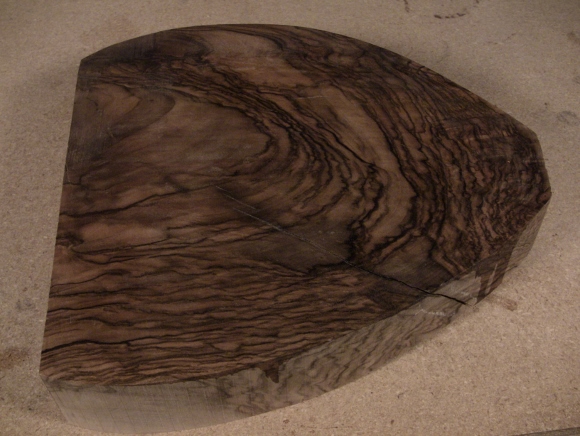
OK, maybe I get excited about some pretty boring things.  But, I was extremely lucky today to pick up an absolutely incredible piece of English Walnut for reel seats.  This piece measures about 13″ x 13″ x 3″.  While this looks like “ultra expensive” Circassian Walnut, it’s actually Oregon grown English Walnut.  It’s probably one of the finest pieces of walnut I’ve ever seen, and it will make some stunning reel seats.  While it has a sizeable crack running through it, I can work around it.  I should be able to get 12 or 14 reel seats from this piece.  I can’t wait to get out to my lathe and turn some pieces.

007 (580x436)