Building a Hollow-Built Bamboo Switch Rod – Chapter 1

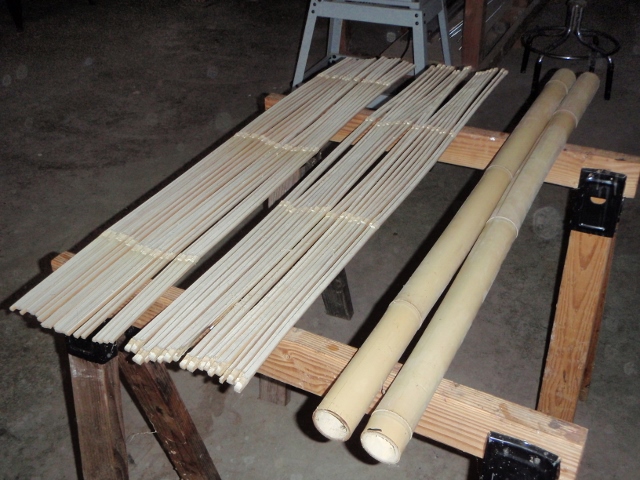
I recently started on another Hollow-Built Bamboo Switch Rod.  I though it would be fun to document my process along the way, so here are some early photos.  First, the bamboo is selected and split.  For this Switch Rod, four pieces of matching bamboo were used.
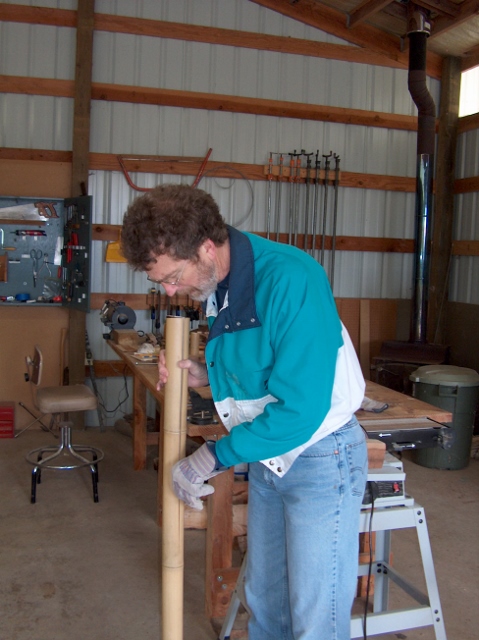
Each piece of bamboo is split into 18 to 20 pieces.

Each piece of bamboo is split into 18 to 20 pieces.

Splitting into small strips.

Splitting into narrow strips.

The strips for the Butt Section and Mid Section are done.  The Tip sections still need to be split.

The strips for the Butt Section and Mid Section are done. The Tip sections still need to be split.
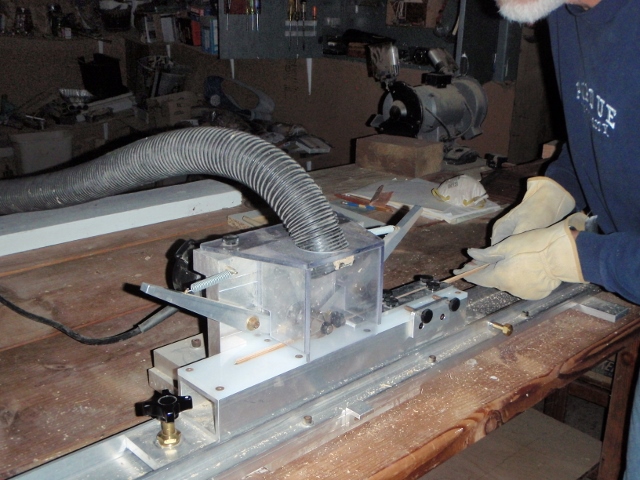
After heat treating, the bamboo strips are roughed out into a triangular shape on a Bellinger Beveler.
After heat treating, the bamboo strips are roughed out into a triangular shape on a Bellinger Beveler.

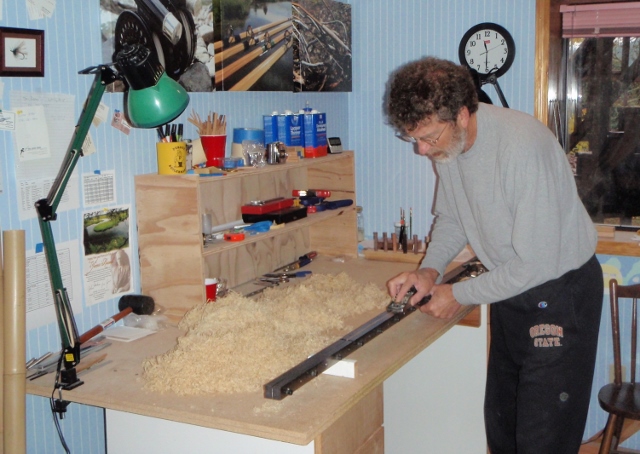
Hand Planing gets the strips down to the final tapered dimensions.
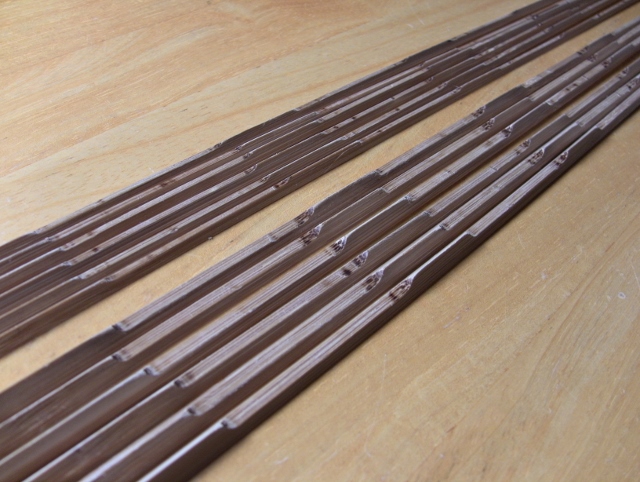
Hand Planing gets the strips down to the final tapered dimensions.

Each strip on the Butt and Mid Sections get hollowed with scalloped cuts on the inside edge.
Each strip on the Butt and Mid Sections get hollowed with scalloped cuts on the inside edge.

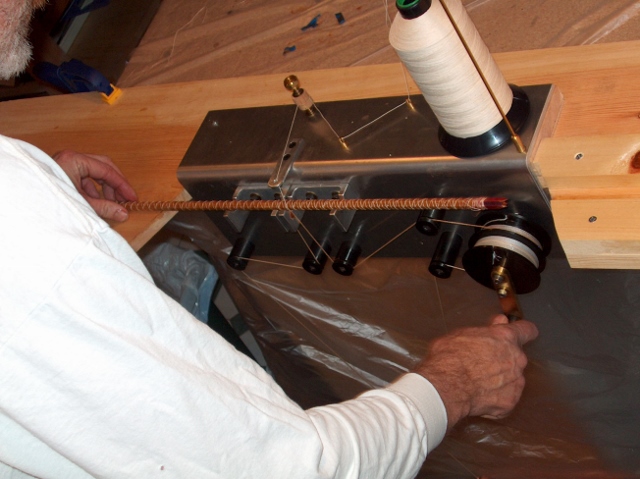
- The planed and hollowed bamboo strips are then glued together using Unibond 800 adhesive and a Bellinger Binder. The thread holds the strips together under a constant tension until the glue cures.

– The planed and hollowed bamboo strips are then glued together using Unibond 800 adhesive and a Bellinger Binder.
The thread holds the strips together under a constant tension until the glue cures.


Determining the line weight of a bamboo fly rod.

A good friend and fellow bamboo rod builder (Skip Hosfield) sent this to me.  I’m not sure who developed this procedure so I can’t give him/her the credit they deserve…it works quite well.

1)  Accurately measure the distance from the rod tip to the front of the cork grip (not the entire rod length).  Divide that number by 10.  Example:  96″/10=9.6

2) Clamp the rod grip to a table so that the rod is horizontal next to a wall.  Mark the position of the tip of the rod on the wall.  Put a paper clip through the top of a small plastic bag and hang the paper clip and bag to the tip of the rod.  Slowly add small weights (coins, washers, nuts, etc.) to the bag until the tip flexes down exactly 1/10 of the measured rod length: Above example 9.6″.

3) Remove the plastic bag, paper clip, and the weights you’ve added and weight everything on a gram scale.  Example:  Paper clip, bag, and coins collectively weighed 20 grams.

4) Divide the measured weight by adjusted rod length to get a grams/length ratio.  Match the ratio to the recommended line weight in the table below:  Example 20 grams/9.6″=2.1.  This rod is about a 5 wt. rod.

Ratio            Recommended Line Weight

1.4 – 1.6                              3

1.6 – 1.9                              4

1.9 – 2.2                             5

2.2 – 2.6                            6

2.6 – 3.0                            7

3.0 – 3.5                            8

3.5 – 4.2                            9

4.2 – 5.0                           10


More Bamboo Switch Rod Casting

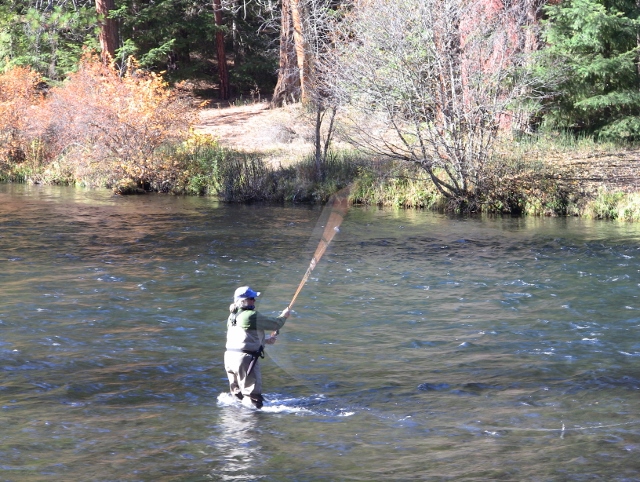
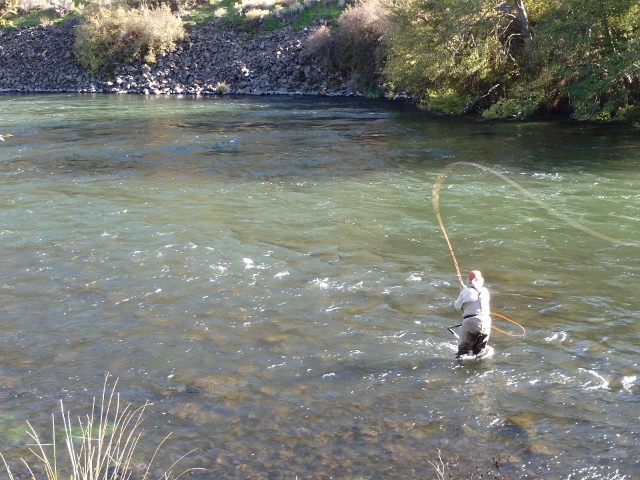
Mary Ann and I took one of my Bamboo Switch Rods out recently on the Metolius River and the Deschutes River, swinging for larger trout or steelhead.  We experimented with several different leader set-ups and flies on a Snowbee 4/5 Switch Line.  This 10′  6″  5 wt rod worked extremely well with AirFlo Intermediate and Super Fast Sinking (4.9 inches/sec) Polyleaders with unweighted or moderately weighted streamers and intruder-style flies.  Though we didn’t hook up on any larger fish, we still have a great time.  Here are a couple of photos:

Casting on the Metolius River

Casting on the Metolius River

Swinging for Deschutes River Steelhead

Swinging for Deschutes River Steelhead


Fly Fishing in Stanley, Idaho

I haven’t posted in quite a while.  That’s because I’ve been in Stanley, Idaho all summer just hanging out, doing lots of fishing, and continuing to work on my bamboo fly rods.  Mary Ann guides here for Silver Creek Outfitters, www.silver-creek.com , from June 15th through Semptember 15th on the Salmon River.  While I’m here, I’ve been writing a fly fishing report on a blog at www.flyfishingstanleyidaho.com .    Check it out to see what fishing here in central Idaho is like.

Fly Fishing Stanley Idaho (580x233)


2013 Boise Fly Fishing Expo Update

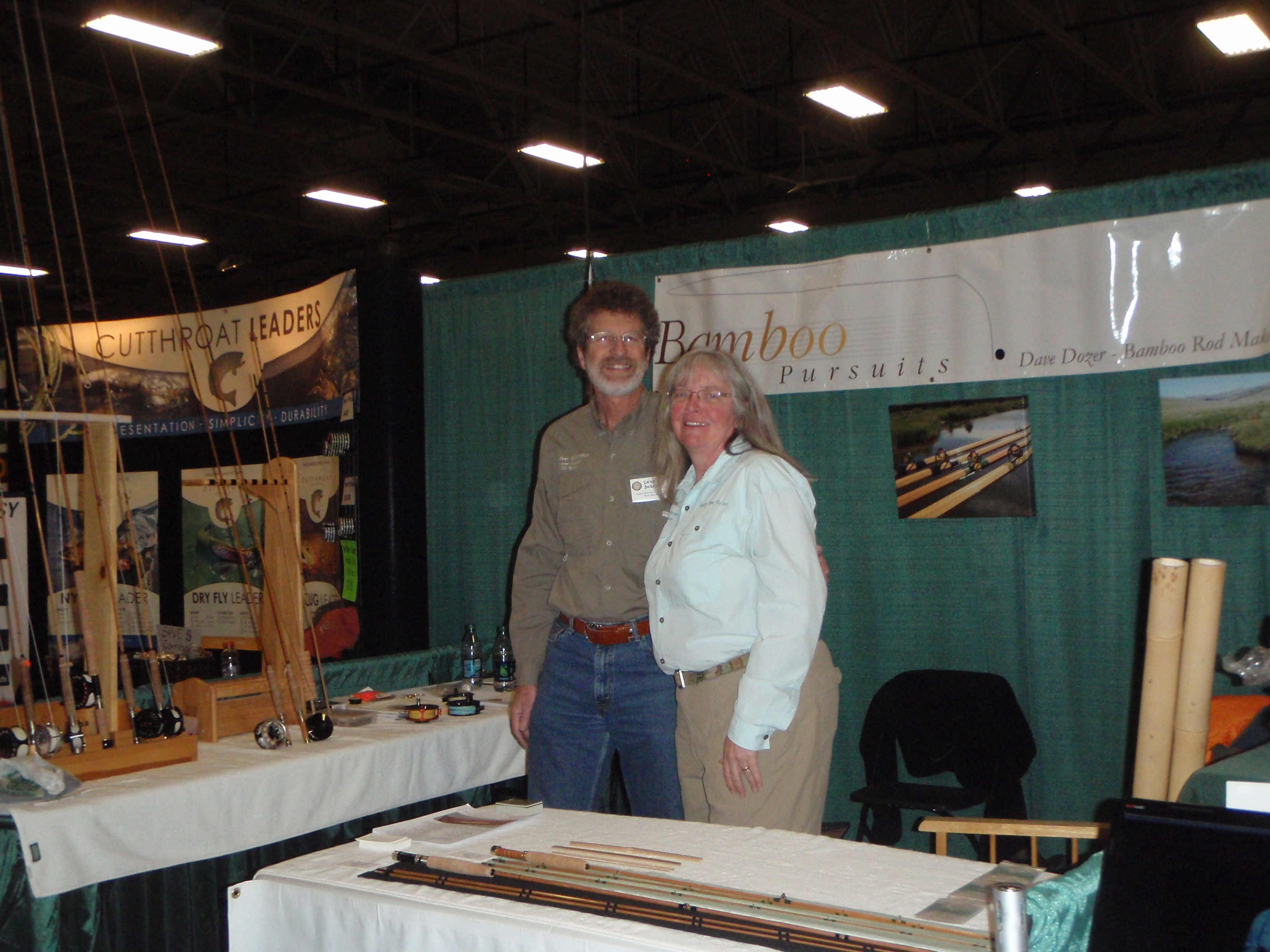
Mary Ann and I just got back from two days in Boise at the Fly Fishing Expo. This is always a fun show, with a very enthusiastic crowd interested in talking about bamboo fly rods. I met a lot of nice folks, and had some great converstations about “Why Bamboo?”, how to build bamboo fly rods, and how to fix up old rods. Several attendees also brought by their old rods to talk about. It’s always fun to pull an old rod out of the rod sock to see what treasure is inside.
My Booth at the 2013 Boise Fly Fishing Expo
Along side my booth was Mike Morin of Cutthroat Leaders. Mike makes some great furled leaders, and I fish with them often. They are a great match to the action of bamboo fly rods and turn over flies in wonderfully smooth manner.

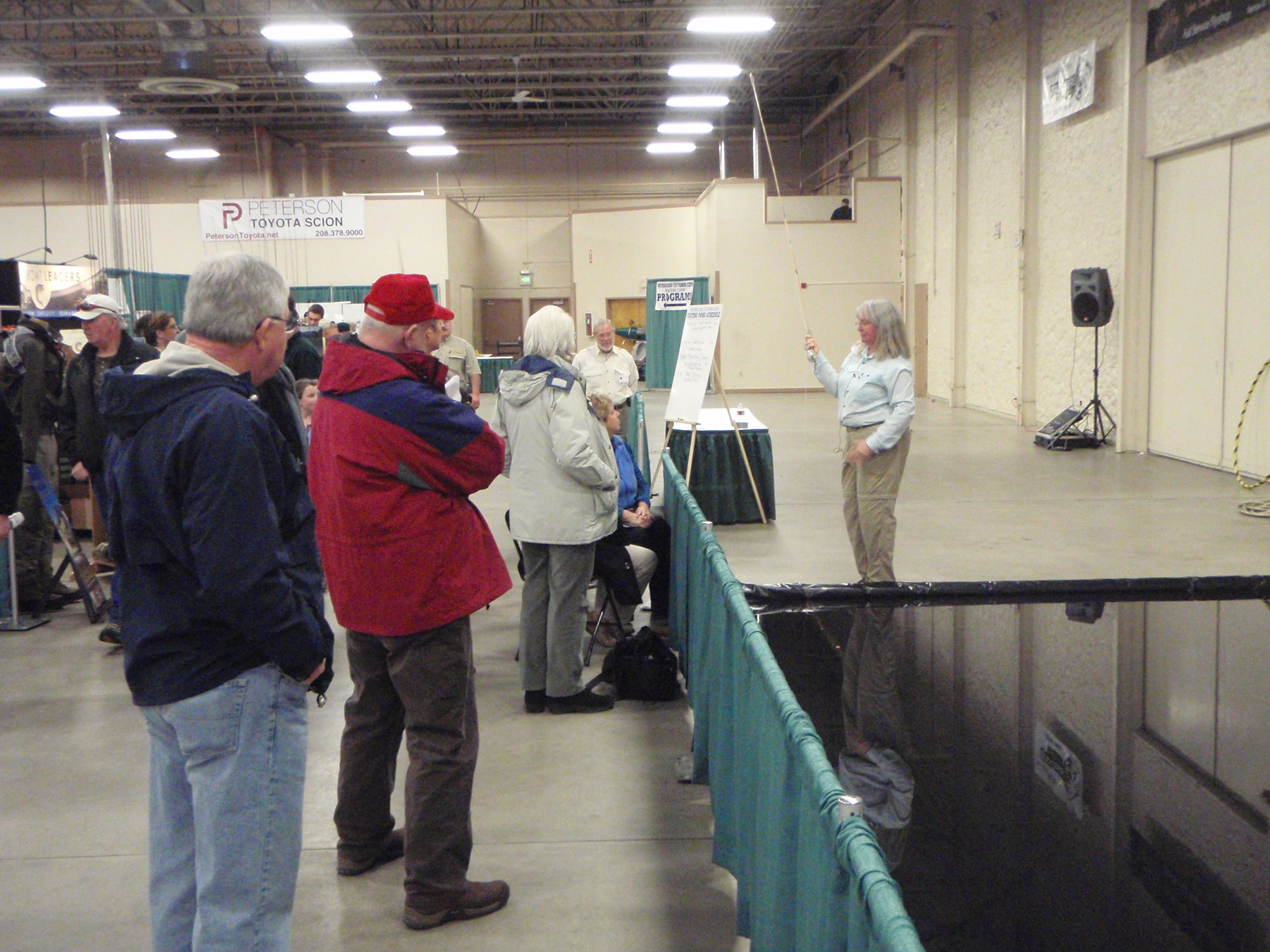
Mary Ann also gave a casting demonstration on “Adjusting your casting stroke for different distances”. She also had the chance to spend a lot of time on the casting pond with folks who were interested in casting bamboo fly rods to see what it’s all about.
Mary Ann Dozer giving a casting demonstration